 English
 Français

Technical guide · Printing processes
Flexo, gravure, offset, or digital — which process fits your job?
If you're buying a press or quoting a packaging run, this is probably the question on your desk. We walk through all four — where each one works, where it doesn't, and why flexo still runs most of the flexible packaging market.
At a glance
None of these four processes is the “best” in every situation. Flexo, gravure, offset, and digital each have a lane. What matters is your run length, substrate, quality bar, and how often you change jobs.
- Flexo — short setup, wide material range, lowest unit cost at volume
- Gravure — top colour consistency on very long, fixed-design runs
- Offset / digital — sheetfed precision, or plate-free runs for short jobs and variable data
Four processes, in plain terms
Before the comparisons, a quick refresher on how each one actually prints.
Flexography
Raised image on a flexible photopolymer plate. Ink travels from the anilox roll to the plate, then to the web. Built for speed and long runs on film, paper, and nonwovens.
Rotogravure
Image sits in engraved cells on a steel cylinder. The cylinder picks up ink, a doctor blade clears the surface, and the cells transfer to the substrate. Cylinders last for millions of metres.
Offset lithography
Oil-based ink on the image area, water on the non-image area. The plate never touches the paper directly — it offsets through a blanket cylinder. The standard for flat, smooth stock.
Digital printing
No plates. The image comes straight from a file via inkjet or toner. Setup is fast, which makes it the go-to for proofs, small batches, and anything with serial numbers or QR codes.
Flexo vs gravure on flexible packaging
These two compete head-on for pouches, wrappers, and film labels. Gravure held the quality crown for decades. Flexo has been closing the gap — and winning market share — on everything except the longest, most colour-critical jobs.
Market size
Smithers' report The Future of Flexo vs Gravure to 2030 puts the combined flexo gravure packaging market at USD 358.5 billion in 2026. Flexo accounts for USD 250.7 billion of that; gravure, USD 107.8 billion.
Combined market, 2026
$358.5B
Flexography
$250.7B
Gravure
$107.8B
| Factor | Flexography | Gravure |
|---|---|---|
| Plate / cylinder prep | Fast, plates can be made in-house | Slow — electroplating, engraving, chrome plating |
| Environmental footprint | Shifting to water-based and UV inks | Hexavalent chrome under tighter regulation |
| Print quality | Very good with HD flexo; good enough for most packaging | Still the reference for colour consistency |
| Sweet spot | Short to medium runs, frequent design changes | Multi-million-metre runs, fixed artwork |
Gravure cylinders can run a million metres or more; flexo plates typically last about half that. If your design stays the same for six months and you're printing tens of millions of metres, gravure's cylinder cost amortises well. For everyone else — especially SMEs juggling multiple SKUs — flexo's faster changeovers and lower entry cost usually win.
Flexo vs offset: the quality gap is mostly gone
Ten years ago, calling flexo “fast but rough” was fair comment. That's outdated. HD flexo, servo register systems, and better plate imaging have changed what comes off the press.
What HD flexo actually delivers
On a well-set-up CI press, you can hit 200 LPI, smooth vignettes, and register that holds through a long shift. Most consumers can't tell a flexo-printed snack bag from an offset-printed label when both are done properly.
- Finer dots, less grain in halftones
- Higher ink density and wider colour gamut
- Sharper type and cleaner reverses
Where flexo pulls ahead
It runs on films, nonwovens, and rough papers that offset won't touch. You can print, coat, and die-cut in one pass. Water-based inks and direct printing mean less laminate waste.
Where offset still matters
On smooth paper and board, offset can push 200–350 dpi for extremely fine detail. Flexo tops out around 170–180 dpi on paper. For a luxury folding carton, that can still matter. For a potato-chip bag, it usually doesn't.
For corrugated boxes, flexible pouches, and self-adhesive labels, flexo is now the cheaper and faster option — without the quality penalty buyers used to worry about.
Flexo vs digital: different jobs, not a fight
Digital won't replace flexo on a 50,000-metre film run. Flexo won't beat digital on a 500-unit promo with unique QR codes. They overlap in the middle, but each has a clear home.
| Your situation | Pick this |
|---|---|
| Under 1,000 units, proofs, serial numbers, personalised graphics | Digital |
| Medium to long runs, mixed substrates, lowest cost per metre | Flexography |
Digital strengths
Zero plate cost. Send a file, start printing. Variable data is native. For a brand launch or regional test market, that's hard to beat.
Flexo strengths
Once plates are on, unit cost drops fast. Presses run at 100–500 m/min (600 on top-end CI lines). Colours pop more. Thick, textured, or non-absorbent materials are no problem.
Four reasons flexo owns packaging
- 1
Runs on almost anythingPaper, LDPE, HDPE, PET, PP, OPP, PVC, PA, shrink film, breathable film, nonwoven — no other process covers this range.
- 2
Speed that digital can't match100–500 m/min is normal; 600 m/min on high-end CI servo presses. That's the throughput packaging lines need.
- 3
Getting cleanerWater-based and UV inks are now mainstream. Plate processing is moving from solvent wash to water wash. The gap vs gravure on environmental grounds keeps widening.
- 4
Lower total cost over timeSticker price can be higher than some alternatives, but faster makeready, less startup waste, and lower energy per metre make flexo cheaper to run year over year.
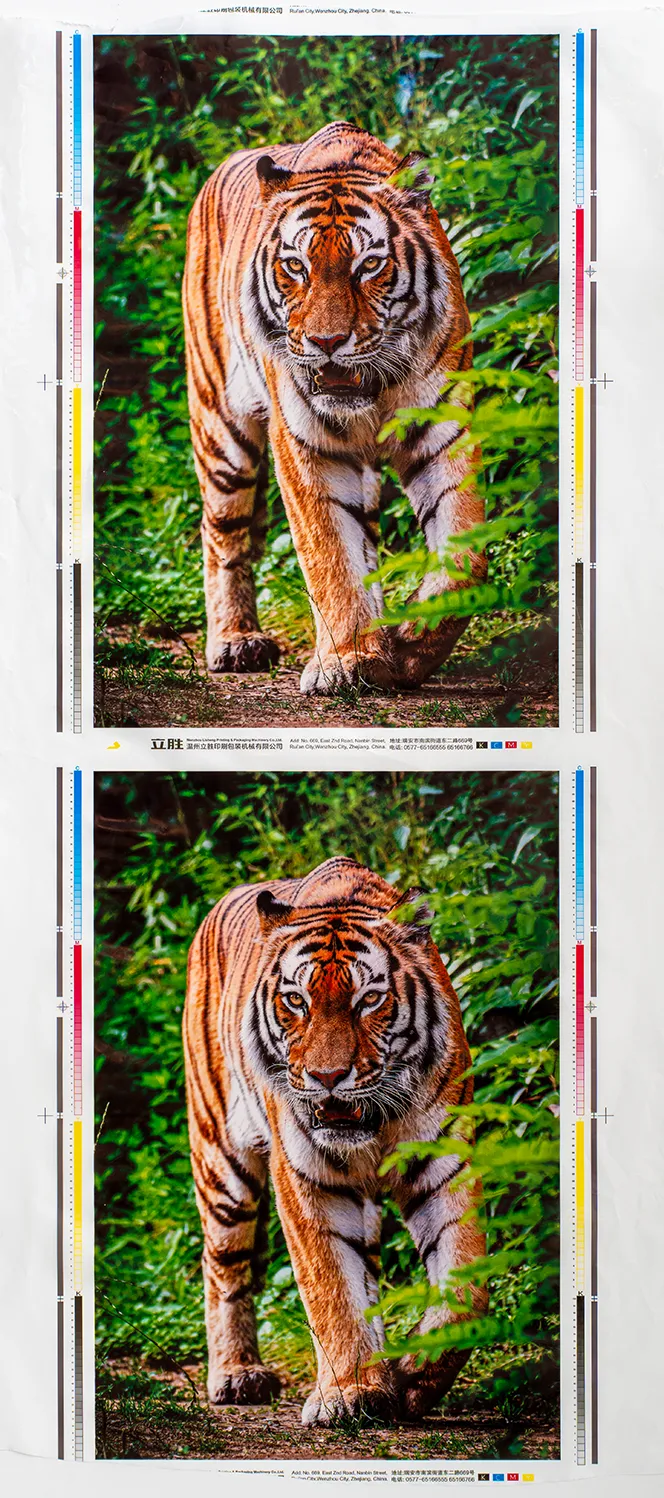
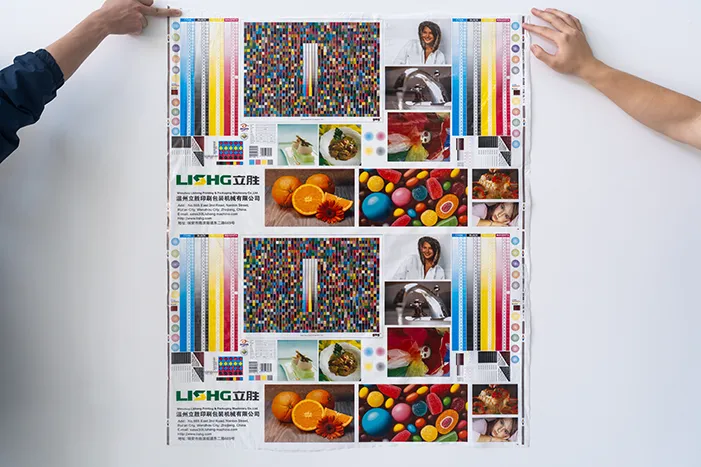
LISHG Machinery: flexo presses from entry level to full servo
We're based in Wenzhou and have been building flexo equipment for over 20 years. Our line spans small stack presses for startups through 8-colour CI servo machines for high-volume film converters. About 70% of our sales go overseas — 68 countries and counting.
Stack presses
From USD 10,000. Paper and nonwoven. Compact footprint, easy to learn.
Standard CI satellite
4–8 colours, up to 300 m/min. Solid option for flexible packaging on a budget.
CI with sleeve technology
4–8 colours, 300 m/min. Sleeve mounting cuts plate change time.
Full servo CI
4–8 colours, 500 m/min, ±0.1 mm register. Top 8-colour model: USD 881,000–1,028,000.
- Films 8–250 µm, papers 40–120 g/m², shrink film, nonwoven, breathable film
- Engineers available for overseas install, commissioning, and operator training
- One-year warranty, 24-hour technical support
Common questions
Flexo or gravure for a small converter?
If you change designs often and run short-to-medium jobs, flexo. If one artwork runs for months at multi-million-metre volumes, gravure's cylinder cost makes more sense. Most SMEs we talk to end up with flexo.
Can flexo match offset quality?
On packaging, yes. HD flexo at 200 LPI with tight register is indistinguishable from offset for most buyers. Offset still wins on ultra-fine detail for premium cartons.
Will digital replace flexo?
Not for high-volume flexible packaging. Digital owns short runs and variable data. Flexo owns everything else. Many plants run both.
Is flexo environmentally friendly?
It's improving fast. Water-based and UV inks are standard on new lines. Plate making no longer needs the solvents or chrome plating that gravure cylinders do.
What substrates can a flexo press run?
LDPE, HDPE, PET, PP, OPP, PVC, PA (8–250 µm), papers 40–120 g/m², shrink film, nonwoven, breathable film — and more.
How much does a flexo press cost?
At LISHG, stack presses start around USD 10,000. A full servo 8-colour CI runs USD 881,000–1,028,000. Most buyers land somewhere in between depending on colours, width, and automation level.

Not sure which process — or which press?
Tell us your substrate, run length, and budget. We'll suggest a process and, if flexo is the fit, a machine configuration that matches. Installation and training overseas included.
Wenzhou Lisheng Printing & Packaging Machinery Co., Ltd. (LISHG Machinery)
Phone / WhatsApp: 86 17758129796
Email: merrylishg@gmail.com
Website: lsprintingmachine.com
